What an L2 Is, and Why Our City Has Three Shores
Base and Soneium are Ethereum L2s, Sonic is a chain of its own. What that means for a player: gas, bridges, balances, and the mistakes worth avoiding.
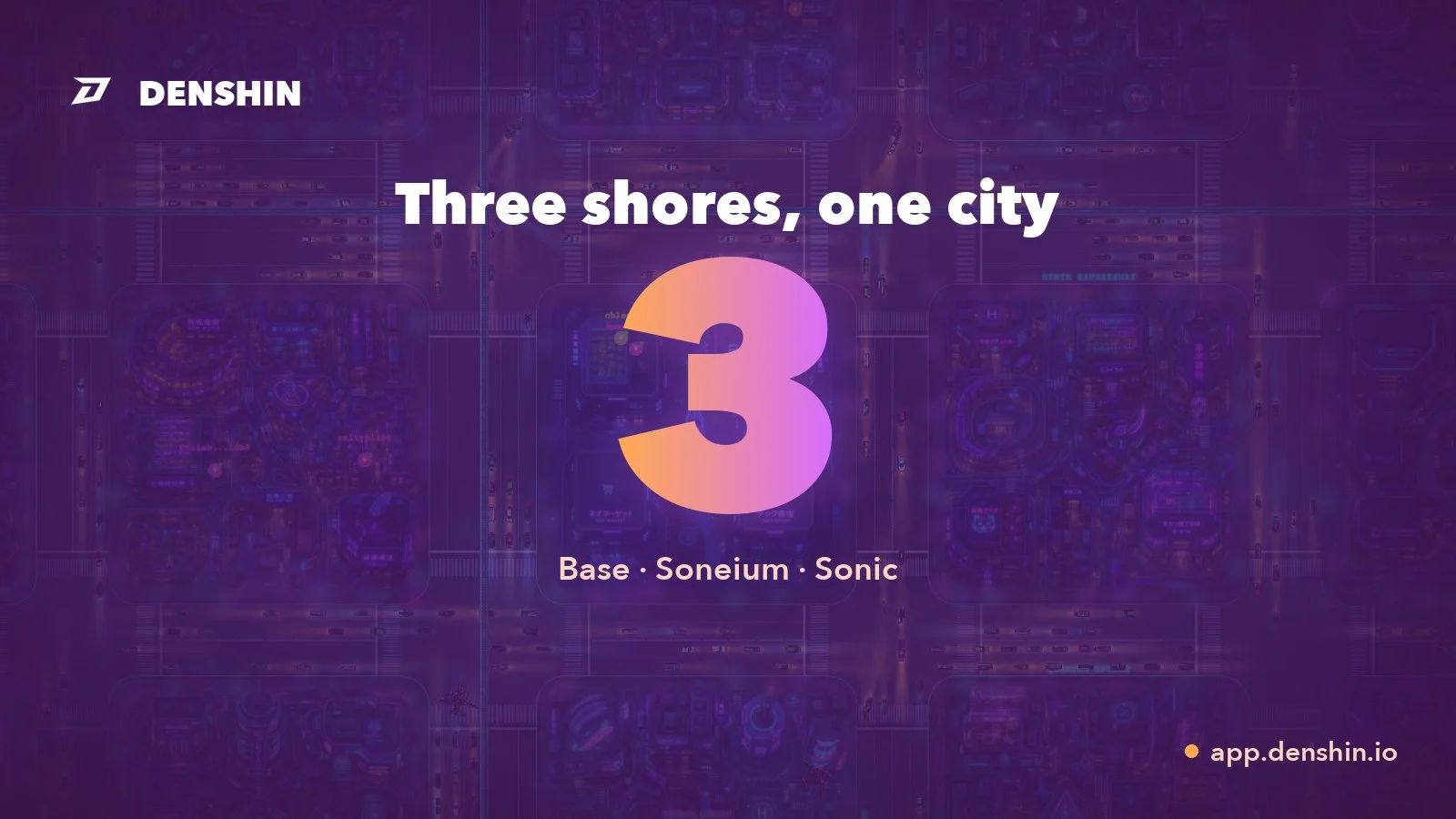
Our city sits on three networks: Base, Soneium and Sonic. The question we hear most from new players isn't about quests at all. It's "what's an L2, and why do I need three of them?"
Short answer: you don't need all three. Everything on Base can be finished without ever leaving it. But the three are different kinds of places, and knowing what each one is saves you from the classic first-week mistakes: gas on the wrong network, a token that "disappeared", a bridge that seems to take forever.
Why L2s exist#
Ethereum is the most battle-tested smart-contract network there is, and that's exactly why its block space is in demand. When many people want to use the same blocks, each transaction gets expensive. Not every swap needs to compete for space on the main chain.
A layer 2 runs transactions on its own, faster and much cheaper, and regularly posts the results back to Ethereum. The L2 handles the traffic; Ethereum keeps the record that everyone can check. For a player the result is simple: the same kind of wallet, the same kind of apps, and fees that are usually measured in cents or less.
You'll also hear the word rollup. It describes how most L2s do this: they roll many transactions up into one batch and post it to Ethereum. Base and Soneium are both rollups built on the same open-source stack, the OP Stack.
Base: the home district#
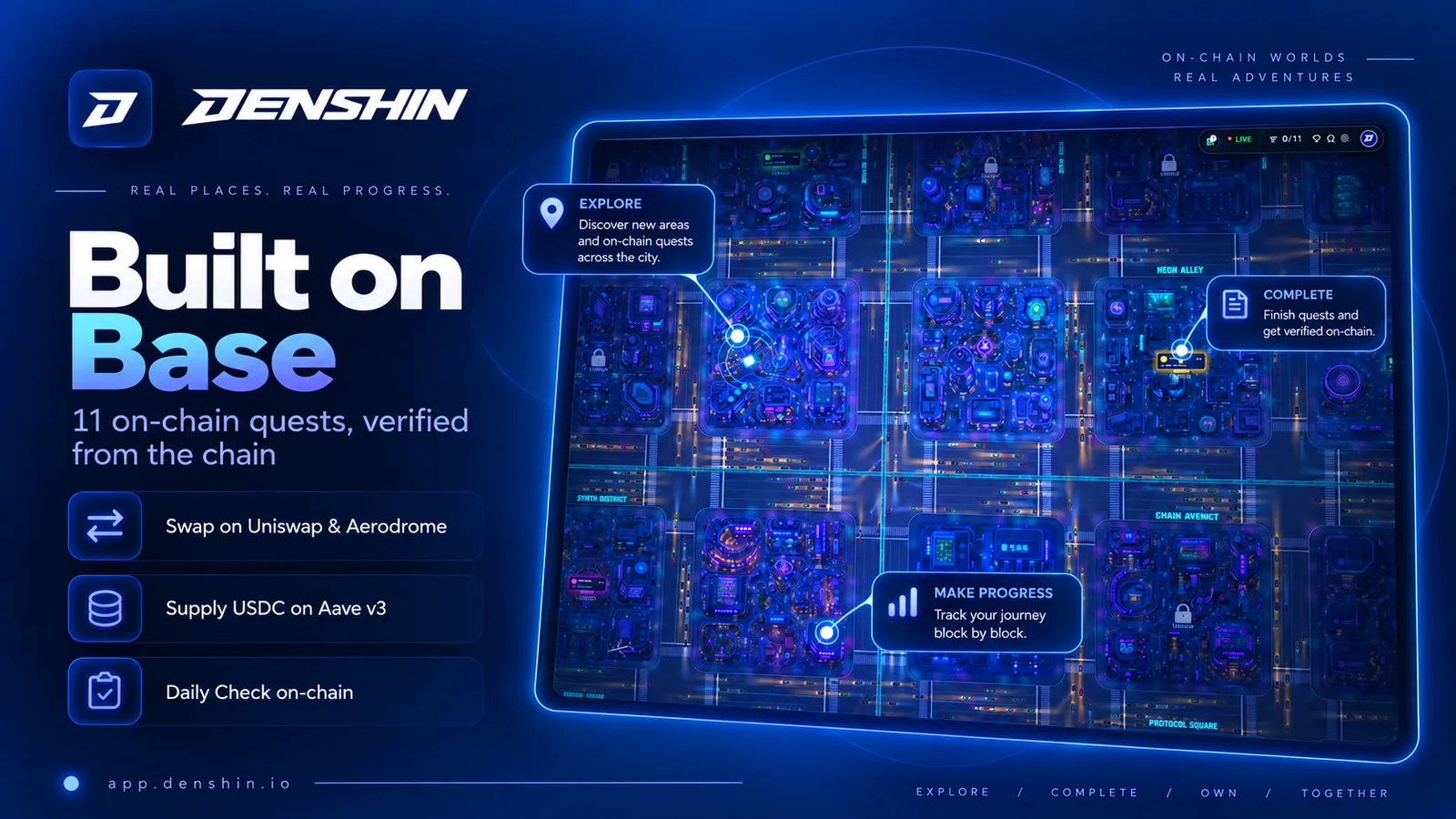
Base is an Ethereum L2 incubated by Coinbase. Gas is paid in ETH, and you can usually withdraw from an exchange straight to Base, which makes it the easiest place to start.
In our city Base is where the season starts and where most of it happens: 11 quests worth 720 points. It's where you learn the whole vocabulary of on-chain life: hold gas, hold a stablecoin, make a trade, make a deposit, and do it again somewhere else.
Soneium: the far shore#
Soneium is also an Ethereum L2 on the OP Stack, built by Sony Block Solutions Labs. Gas here is ETH too, but it's ETH that crossed a bridge to get here. The dollars are called USDC.e: the ".e" is the tell that this USDC is a bridged version, not one issued natively on the network.
That's why we call it the far shore. You reach it by bridge, and once you're there you meet venues that don't exist on Base. In our season Soneium carries 8 quests worth 390 points, and it's where the quests stop asking for single actions and start asking for standing positions: a deposit that's still open, a liquidity position that's still held.
Sonic: a chain of its own#
Here's the part that surprises people: Sonic isn't an L2. It's an independent network with its own validators and its own gas token, called S. It's built for speed, and it doesn't post its blocks to Ethereum the way a rollup does.
For a player, that difference is practical:
- You need S for gas, not ETH. A wallet full of ETH on Sonic can't pay for anything.
- Getting there is a different route. You don't hop between two OP Stack networks; you bridge into a separate chain, or withdraw S from an exchange that supports Sonic.
- The dollars are native. USDC on Sonic is issued by Circle directly, so there's no ".e".
In our city Sonic is deliberately light: 4 quests, 90 points. A short first visit, not a second campaign.
What a bridge actually does#
A bridge moves value from one network to another. Under the hood, the token on the first network is locked or burned, and the matching amount appears on the second. What matters to you:
- It takes a little time. Seconds to minutes on most routes. Don't panic and send twice.
- You arrive without gas unless you bring some. Bridge a bit of the destination's gas token first, or use a bridge that delivers some for you.
- The token may arrive with a different name, like USDC.e on Soneium. That's normal, as long as the token comes from a source you trust.
The same address, different balances#
Your wallet address is the same on Base, Soneium and Sonic. Your balances aren't. Each network keeps its own ledger, so 10 USDC on Base and 0 USDC on Soneium is perfectly normal, and "my tokens disappeared" almost always means "my wallet is looking at a different network".
Before every action, check two things: the network selected in the app, and the network selected in your wallet. Most first-week mistakes come down to one of those.
A short checklist#
- Start on Base. Withdraw a little ETH straight to Base and you're ready.
- Moving to Soneium? Bring ETH across for gas, then pick up USDC.e there.
- Moving to Sonic? You need S for gas, not ETH.
- Same address everywhere; check the network before you sign.
- Small amounts are fine. Our thresholds start at ten cents for a reason.
If you'd like to try it with a map that lights up as you go, every quest and what it reads is listed per network: Base, Soneium and Sonic. New to swaps? Start with your first swap for under ten cents.