Why On-Chain Quests Are a Better Way Into Web3
Clicking tasks teach nothing and are easy to farm. Here is why we build on-chain quests: real actions, verified on the chain, rewarded by position, not volume.
For most people, the way into Web3 is a mess of browser tabs, half-finished guides and risks nobody labels. You're told to “try the ecosystem”, and then you're left alone with a wallet, a bridge and a swap screen. We think more guides won't fix that. Better practice will: short, bounded actions with a clear explanation, where the chain itself checks the result. That is what an on-chain quest is, and it is the reason DENSHIN exists.
The trouble with clicking tasks#
The usual Web3 task list rewards follows, likes, reposts and screenshots. Those tasks are quick to set up, and for everyone involved they are close to useless:
- The player learns nothing. A follow teaches you nothing about wallets, gas, networks or what a signature means.
- The project learns nothing. A thousand follows from a thousand fresh accounts look the same as a thousand real people.
- The system gets farmed. A task that anyone can complete in two seconds gets completed by scripts in two milliseconds.
The result is activity that looks big on a dashboard and leaves no trace anywhere that matters.
What makes a quest “on-chain”#
An on-chain quest asks for something that happens on a blockchain: a swap, a lending deposit, a liquidity position, a balance held on a network. Verification then reads the chain, not a screenshot. In DENSHIN that means a few strict rules:
- An action counts only from the block where you started the quest. You cannot reuse old history.
- Every accepted transaction hash counts once, globally and forever.
- The quest states up front what it checks, on which network and above which threshold.
It's slower to build than a follow button. But a quest verified this way proves that a real wallet did a real thing, and neither side has to take the other's word for it.
Why it is better for players#
The main benefit is that you learn by doing, with small amounts. On networks like Base, Soneium and Sonic a transaction costs a fraction of a cent, so trying a swap or a deposit is cheap. By the end of a season you have swapped on a DEX, deposited into a lending market and moved to a new network yourself. You've done more than read about them.
That history stays in your wallet, and in DENSHIN it adds up to a reputation score. You earn it by showing what your wallet and your accounts have really done, and it multiplies what every quest pays you. The score isn't something you can buy.
A good quest also teaches caution. Signing in should never cost gas or grant spending rights, and ours does neither. A quest should never ask you to approve a token you don't understand. Nobody legitimate will ever ask you to pay to claim a reward.
Why it is better for ecosystems#
Networks and protocols don't need more follows. They need people who actually try the product. On-chain quests send users to real contracts on real networks. The activity is verifiable, and it happens where the ecosystem lives, not on a social feed.
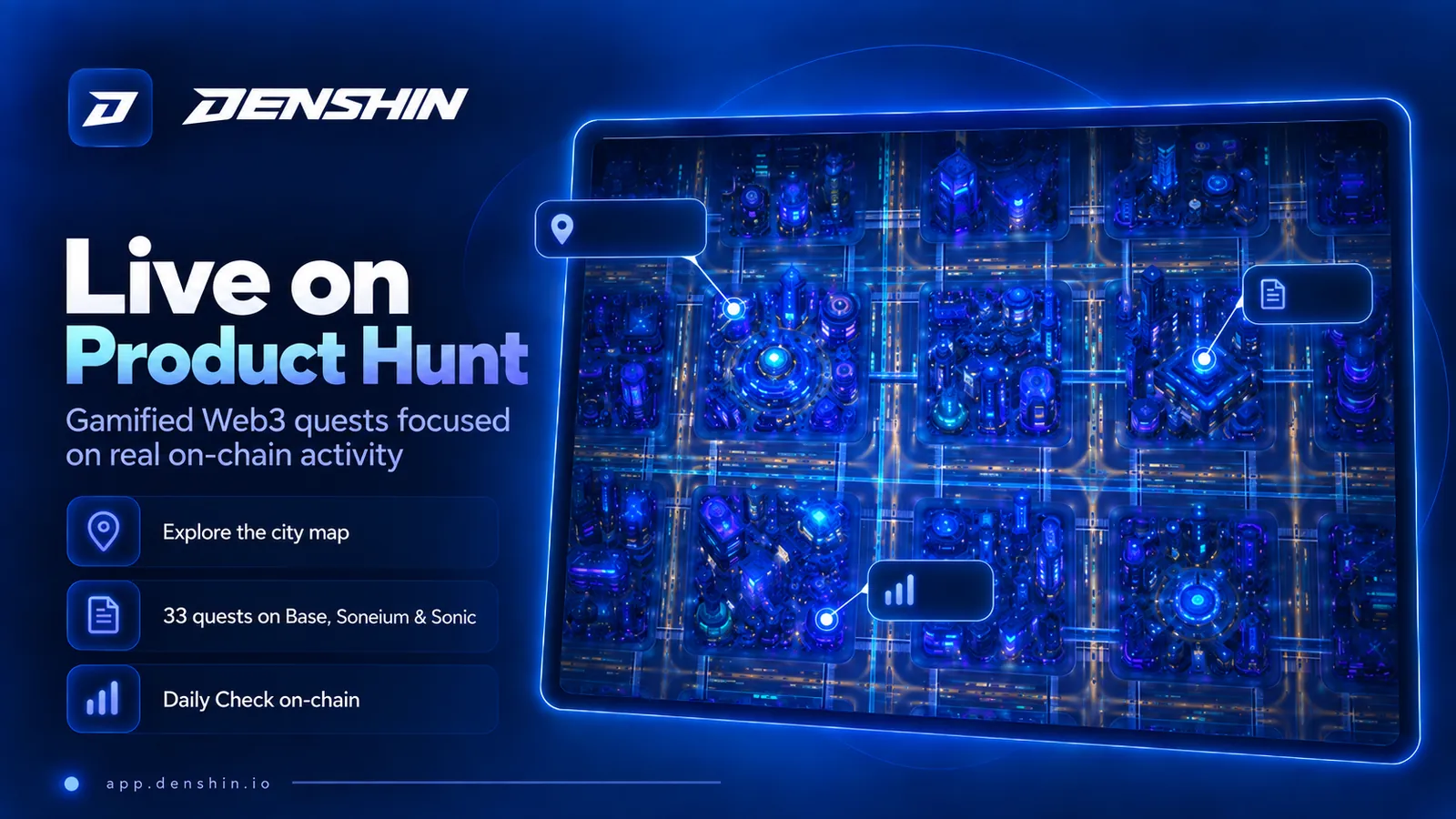
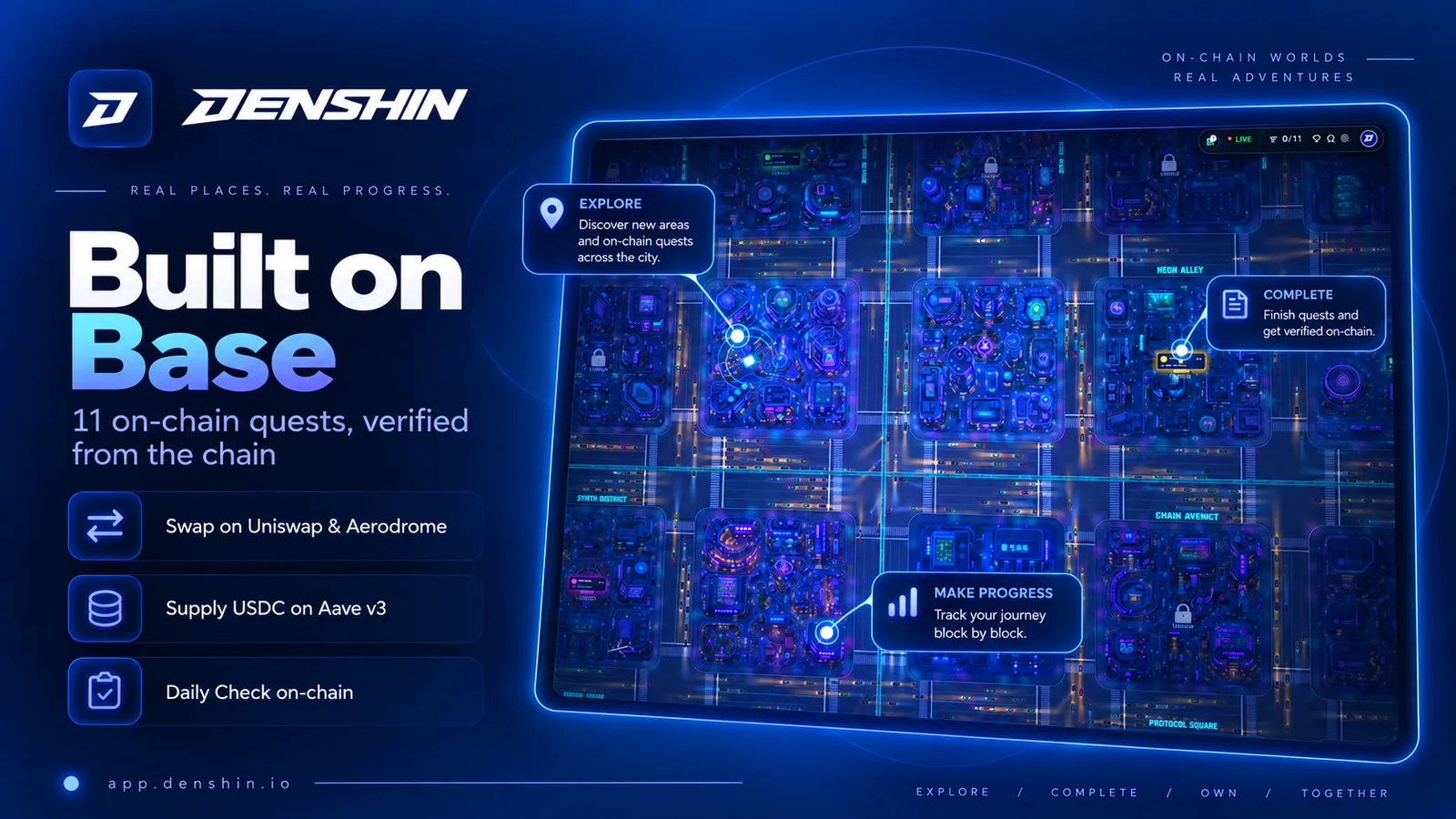
This matters most for newer networks. Plenty of people have never tried a second or a third chain simply because nothing gave them a reason to. In our Genesis season, 23 of the 33 quests are on-chain: 11 on Base, 8 on Soneium and 4 on Sonic. Moving a known habit to a new network is exactly the step a quest can make easy.
Fair by design, not by promise#
A quest system is only as good as its incentives. If every point turns into money, people will farm points. We built the other way around:
- Points decide order, not amount. The season pool is fixed and split by leaderboard position, so farming harder can only move you up the board. It can never make the pool bigger.
- Every source has a limit. A Daily Check pays at most 30 points a day. Referral income stops at a quarter of what you earned yourself.
- The reward needs one real transaction made inside the season window.
- Every number is public. Thresholds, formulas, caps and tiebreaks are written down in the player handbook.
Why we made it a city#
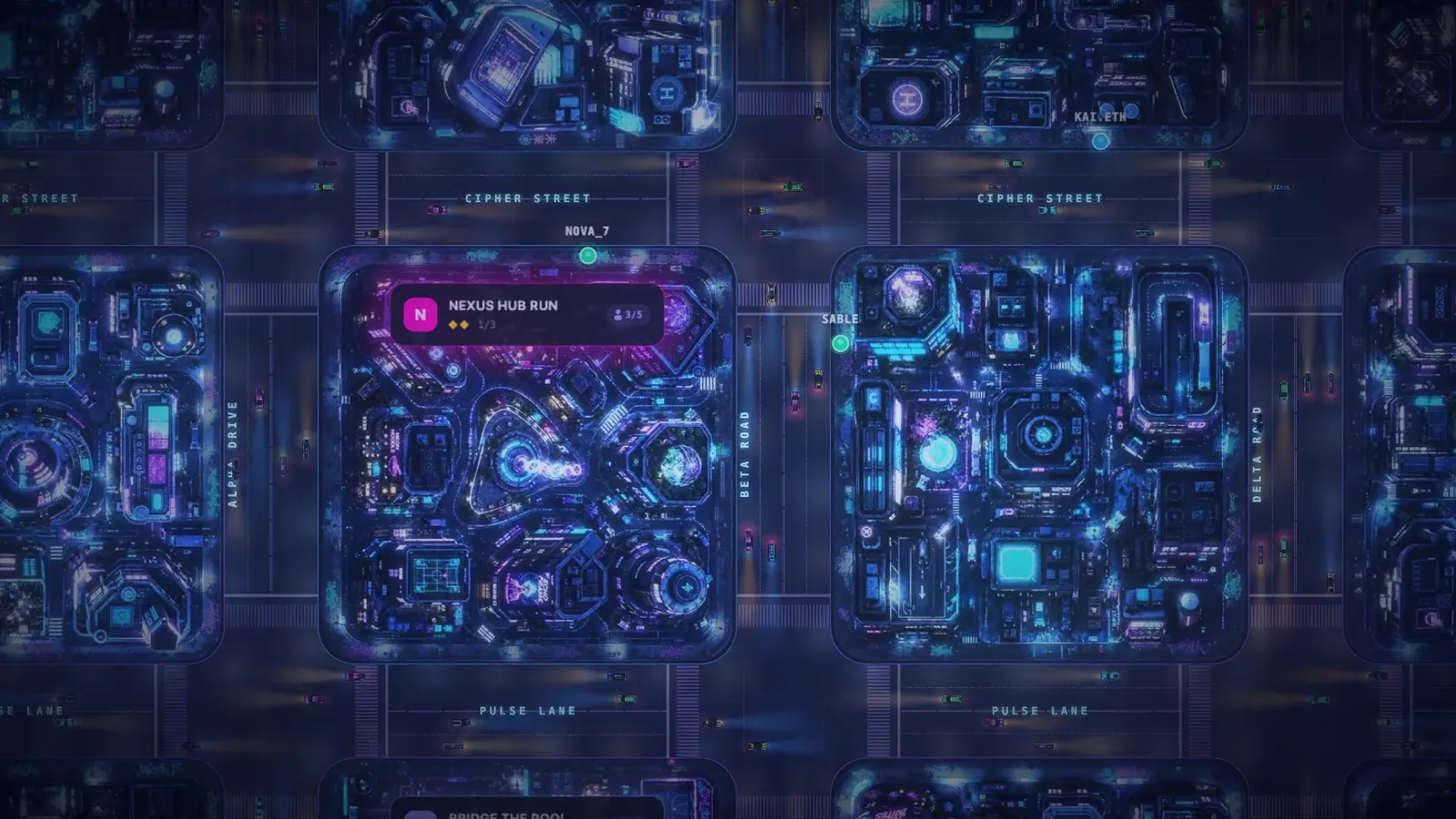
Checklists are forgettable. A map is not. In DENSHIN the city is the progress bar. Quests stand on quarters, and finishing one lifts the seal on that part of the map. You can see what you've done, what is still sealed and who else is playing around you. A new season brings a new city, which gives you a reason to come back that no checklist can.
That's the bet behind DENSHIN: on-chain quests, verified on the chain and wrapped in a place worth returning to. It's a better way into Web3 than one more list of clicks. The Genesis season is live, and the map opens without a wallet. Take a look.